
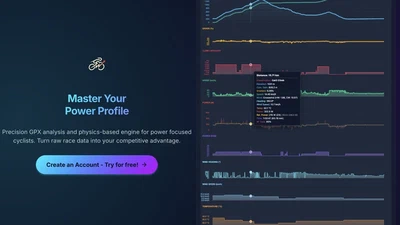
Bike Power Pacer
Precision GPX analysis and physics-based engine for power-focused cyclists.

I am Maxime, a Bioinformatics scientist specializing in the development of statistical tools and workflows for the analysis of omics data. I have extensive experience working with prokaryotic, eukaryotic, and human systems, and I excel at transforming complex biological datasets into scientific results through rigorous approaches and scalable bioinformatics solutions.
After an undergraduate degree in biology, I initially pursued studies in population and environmental sciences. After realizing I wanted to focus more on statistics and data analysis, I returned to complete an M.Sc. in Bioinformatics.
I completed my PhD in the Microbiome Sciences research group at the MPI-EVA, studying ancient DNA metagenomics, and continued this work as a postdoctoral researcher at the Leibniz-HKI with a focus on fermentation microbiomes. Recently, I transitioned to computational oncology and cancer research, focusing on personalized cancer vaccine development and the analysis of cancer genomics datasets.
PhD candidate in Bioinformatics
Friedrich-Schiller-Universität Jena 🇩🇪
M.Sc. in Bioinformatics
Université Paris Diderot 🇫🇷
M.Sc. in Ecology and Environmental sciences
Université Joseph Fourier, Grenoble 🇫🇷
Exchange Semester
University of Nordland 🇳🇴
B.Sc. in Life Sciences
Université Paris Descartes 🇫🇷
TRON - Translational Oncology Mainz
Leibniz Institut for Natural Product Research and Infection Biology Hans Knöll Institute
Max Planck Institute for Evolutionary Anthropology
Max Planck Institute for the Science of Human History
Natural History Museum - CNRS
Institut Pasteur
CRG
MPI-EVA
University of Oslo
Friedrich-Schiller-Universität Jena 🇩🇪
Université Paris Diderot 🇫🇷
Université Joseph Fourier, Grenoble 🇫🇷
University of Nordland 🇳🇴
Université Paris Descartes 🇫🇷
Precision GPX analysis and physics-based engine for power-focused cyclists.
comparative Analysis of Gene Set Enrichment analysis. R and transcriptomics. Also available as a Shiny GUI.
Recreate the writing of Philosopher Denis Diderot using Markov Chains.
Phylogeny of this Moroccan medicinal plant Anacyclus genus using the internal transcribed spacer marker.

What is the best strategy to win a 🚗 ? Keeping the original choice, or changing of door ?
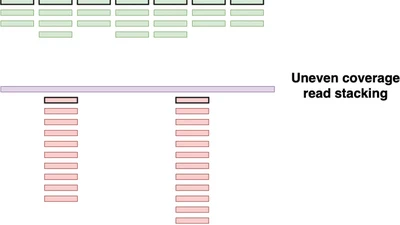
How to distinguish between true and false positive assignations with KrakenUniq

Recently, I’ve been working on a project where I need to store a key-value pairs for very large files. In Python, the first idea would be to use a dictionary. However, I had more …
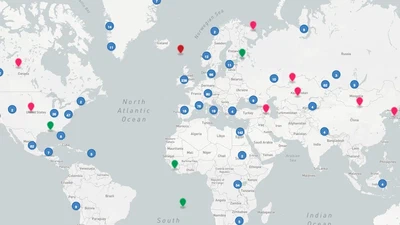
Recently, I’ve been involved with the AncientMetagenomeDir project. Briefly, with this collaborative community effort, we aimed to regroup in one single repository, all the …